Detail Katalog
ID: 10050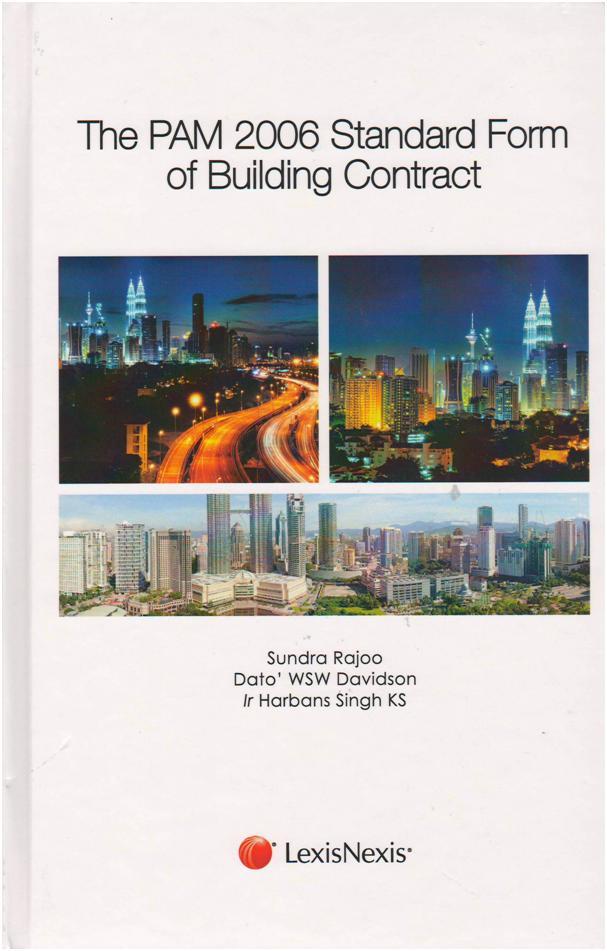
PAM 2006 Standard form of Building Contract / Sundra Rajoo, Dato' WSW Davidson, and Harbans Singh KS
Edisi: Cet. 1
Pengarang:
Rajoo, Sundra ; Dato' WSW Davidson ; Harbans Singh KS
Rajoo, Sundra ; Dato' WSW Davidson ; Harbans Singh KS
Penerbit:
LexisNexis,
LexisNexis,
Tempat Terbit:
Selangorq :
Selangorq :
Tahun Terbit:
2010
2010
Bahasa:
eng
eng
Subjek
Construction contracts
Deskripsi Fisik:
lxxi, 926 hlm ; 25 cm
lxxi, 926 hlm ; 25 cm
ISBN:
978-967-531-756-1
978-967-531-756-1
Nomor Panggil:
690 RAJ p
690 RAJ p
Control Number:
INLIS000000000010034
INLIS000000000010034
BIB ID:
0010-0921000069
0010-0921000069
Catatan
he Pertubuhan Akitek Malaysia (PAM) standard forms of building contract are used extensively in the Malaysian building industry. The Malaysian construction industry is familiar with the meanings of provisions of the PAM Forms through practice and court decisions. It is estimated that 90% of the building contracts in the private sector are based on a PAM form namely, the PAM/ISM 1969 Form or the PAM 1998 Form.
In 2007, PAM introduced the PAM 2006 Forms as drafted by the PAM Contract Review Committee. It is not disputed that the PAM 2006 Forms significantly change the way the risks for time, money matters, quality issues and dispute resolution are allocated between the contractor, employer and consultant team. The Forms are also more procedural, requiring the contractor, employer and consultants to strictly adhere to time provisions with the attendant loss of rights or incurring of liabilities. The Forms were made available for use in 200 8.
The earlier books on the PAM/ISM 1969 Form by the late Professor Vincent Powell-Smith and the PAM 1998 Form by Mr. Sundra Rajoo have been well received. This book expands on the approach of the earlier two books to produce a new book which combines an exposition of the modern law in relation to construction together with a commentary on the relevant contract conditions. This work is in tended to stimulate debate and alert users in the building industry to the changes brought about by the PAM 2006 Form. It is not a mere commentary but is comprehensive enough to cover issues of construction law arising thereof.
As such, the book critically examines by way of practical overview and judicial principles, the notable revisions that have been undertaken, the plus points of such revisions, the apparent deficiencies and drawbacks in practice, foreseeable ar eas of contention and possible improvements. It sets out the applicable general principles of construction law, a description of how the provision is anticipate d to work in practice and wherever possible, provides concrete examples arising from case law.
In 2007, PAM introduced the PAM 2006 Forms as drafted by the PAM Contract Review Committee. It is not disputed that the PAM 2006 Forms significantly change the way the risks for time, money matters, quality issues and dispute resolution are allocated between the contractor, employer and consultant team. The Forms are also more procedural, requiring the contractor, employer and consultants to strictly adhere to time provisions with the attendant loss of rights or incurring of liabilities. The Forms were made available for use in 200 8.
The earlier books on the PAM/ISM 1969 Form by the late Professor Vincent Powell-Smith and the PAM 1998 Form by Mr. Sundra Rajoo have been well received. This book expands on the approach of the earlier two books to produce a new book which combines an exposition of the modern law in relation to construction together with a commentary on the relevant contract conditions. This work is in tended to stimulate debate and alert users in the building industry to the changes brought about by the PAM 2006 Form. It is not a mere commentary but is comprehensive enough to cover issues of construction law arising thereof.
As such, the book critically examines by way of practical overview and judicial principles, the notable revisions that have been undertaken, the plus points of such revisions, the apparent deficiencies and drawbacks in practice, foreseeable ar eas of contention and possible improvements. It sets out the applicable general principles of construction law, a description of how the provision is anticipate d to work in practice and wherever possible, provides concrete examples arising from case law.
Status
Tersedia di OPAC
Bibliografi Nasional Indonesia
Karya Tulis Ilmiah Nasional
Informasi Eksemplar & Metadata
| Nomor Barcode | Nomor Panggil | Akses | Lokasi | Ketersediaan |
|---|---|---|---|---|
00000024729 |
690 RAJ p |
Dapat dipinjam | Mahkamah Konstitusi RI | Tersedia |
Format MARC21 - Total 19 field
| Tag | Ind1 | Ind2 | Nilai | Urutan |
|---|---|---|---|---|
| 001 | _ |
_ |
INLIS000000000010034 | 1 |
| 005 | _ |
_ |
20221112011549 | 2 |
| 035 | # |
# |
$a 0010-0921000069 | 3 |
| 007 | _ |
_ |
ta | 4 |
| 008 | _ |
_ |
221112################g##########0#eng## | 5 |
| 020 | # |
# |
$a 978-967-531-756-1 | 6 |
| 082 | # |
# |
$a 690 | 7 |
| 084 | # |
# |
$a 690 RAJ p | 8 |
| 100 | _ |
# |
$a Rajoo, Sundra | 9 |
| 245 | 1 |
4 |
$a PAM 2006 Standard form of Building Contract /$c Sundra Rajoo, Dato' WSW Davidson, and Harbans Singh KS | 10 |
| 250 | # |
# |
$a Cet. 1 | 11 |
| 260 | # |
# |
$a Selangorq :$b LexisNexis,$c 2010 | 12 |
| 300 | # |
# |
$a lxxi, 926 hlm ; $c 25 cm | 13 |
| 650 | # |
4 |
$a Construction contracts | 14 |
| 700 | _ |
# |
$a Dato' WSW Davidson | 15 |
| 700 | _ |
# |
$a Harbans Singh KS | 16 |
| 520 | # |
# |
$a he Pertubuhan Akitek Malaysia (PAM) standard forms of building contract are used extensively in the Malaysian building industry. The Malaysian construction industry is familiar with the meanings of provisions of the PAM Forms through practice and court decisions. It is estimated that 90% of the building contracts in the private sector are based on a PAM form namely, the PAM/ISM 1969 Form or the PAM 1998 Form. In 2007, PAM introduced the PAM 2006 Forms as drafted by the PAM Contract Review Committee. It is not disputed that the PAM 2006 Forms significantly change the way the risks for time, money matters, quality issues and dispute resolution are allocated between the contractor, employer and consultant team. The Forms are also more procedural, requiring the contractor, employer and consultants to strictly adhere to time provisions with the attendant loss of rights or incurring of liabilities. The Forms were made available for use in 200 8. The earlier books on the PAM/ISM 1969 Form by the late Professor Vincent Powell-Smith and the PAM 1998 Form by Mr. Sundra Rajoo have been well received. This book expands on the approach of the earlier two books to produce a new book which combines an exposition of the modern law in relation to construction together with a commentary on the relevant contract conditions. This work is in tended to stimulate debate and alert users in the building industry to the changes brought about by the PAM 2006 Form. It is not a mere commentary but is comprehensive enough to cover issues of construction law arising thereof. As such, the book critically examines by way of practical overview and judicial principles, the notable revisions that have been undertaken, the plus points of such revisions, the apparent deficiencies and drawbacks in practice, foreseeable ar eas of contention and possible improvements. It sets out the applicable general principles of construction law, a description of how the provision is anticipate d to work in practice and wherever possible, provides concrete examples arising from case law. | 17 |
| 990 | # |
# |
$a 24729 | 18 |
| 990 | # |
# |
$a 24729/MKRI-p/vii-2016 | 19 |
Penjelasan Field MARC21:
- 001: Control Number
- 005: Date and Time of Latest Transaction
- 020: ISBN
- 100: Main Entry - Personal Name
- 245: Title Statement
- 250: Edition Statement
- 260: Publication Information
- 300: Physical Description
- 650: Subject
- 700: Added Entry - Personal Name
Aksi Cepat
Informasi Katalog
Ditambahkan: 13 Sep 2021