Detail Katalog
ID: 10464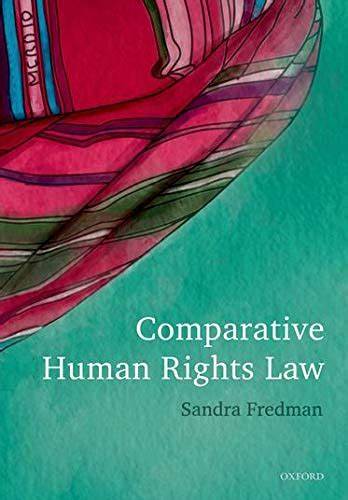
Comparative Human Rights Law / Sandra Fredman
Edisi: 1st ed.
Pengarang:
Fredman, Sandra
Fredman, Sandra
Penerbit:
Oxford University Press,
Oxford University Press,
Tempat Terbit:
United States of America :
United States of America :
Tahun Terbit:
2018
2018
Bahasa:
eng
eng
Subjek
Human Rights -- Comparative Law
Deskripsi Fisik:
xxxvi, 476 p. ; 24 cm.
xxxvi, 476 p. ; 24 cm.
ISBN:
978-0-19-968941-5
978-0-19-968941-5
Nomor Panggil:
341.48 FRE c
341.48 FRE c
Control Number:
INLIS000000000010396
INLIS000000000010396
BIB ID:
0010-0122000130
0010-0122000130
Catatan
Courts in different jurisdictions face similar human rights questions. Does the death penalty breach human rights? Does freedom of speech include racist speech? Is there a right to health? This book uses the prism of comparative law to examine the fascinating ways in which these difficult questions are decided. On the one hand, the shared language of human rights suggests that there should be similar solutions to comparable problems. On the other hand, there are important differences. Constitutional texts are worded differently; courts have differing relationships with the legislature; and there are divergences in socio-economic development, politics, and history. Nevertheless, there is a growing transnational conversation between courts, with cases in one jurisdiction being cited in others. Part I (Chapters 1–5) outlines the cross-cutting themes which shape the ways judges respond to challenging human rights issues. Chapters 1–5 examine when it is legitimate to refer to foreign materials; how universality and cultural relativity are balanced in human rights law; the appropriate role of courts in adjudicating human rights in a democracy; and the principles judges use to interpret human rights texts. The book is unusual in transcending the distinction between socio-economic rights and civil and political rights. Part II (Chapters 6–12) applies these cross-cutting themes to comparing human rights law in five jurisdictions. These chapters focus on seven particularly challenging issues: the death penalty, abortion, housing, health, speech, education, and religion, with the aim of inspiring further comparative examination of other pressing human rights issues. It is primarily court-centred, but also examines courts’ drawbacks.
Status
Tersedia di OPAC
Bibliografi Nasional Indonesia
Karya Tulis Ilmiah Nasional
Informasi Eksemplar & Metadata
| Nomor Barcode | Nomor Panggil | Akses | Lokasi | Ketersediaan |
|---|---|---|---|---|
00000026742 |
341.48 FRE c |
Dapat dipinjam | Mahkamah Konstitusi RI | Tersedia |
Format MARC21 - Total 18 field
| Tag | Ind1 | Ind2 | Nilai | Urutan |
|---|---|---|---|---|
| 001 | _ |
_ |
INLIS000000000010396 | 1 |
| 005 | _ |
_ |
20221029095808 | 2 |
| 035 | # |
# |
$a 0010-0122000130 | 3 |
| 007 | _ |
_ |
ta | 4 |
| 008 | _ |
_ |
221029################g##########0#eng## | 5 |
| 020 | # |
# |
$a 978-0-19-968941-5 | 6 |
| 082 | # |
# |
$a 341.48 | 7 |
| 084 | # |
# |
$a 341.48 FRE c | 8 |
| 100 | _ |
# |
$a Fredman, Sandra | 9 |
| 245 | 1 |
# |
$a Comparative Human Rights Law /$c Sandra Fredman | 10 |
| 250 | # |
# |
$a 1st ed. | 11 |
| 260 | # |
# |
$a United States of America :$b Oxford University Press,$c 2018 | 12 |
| 300 | # |
# |
$a xxxvi, 476 p. ; $c 24 cm. | 13 |
| 650 | # |
4 |
$a Human Rights | 14 |
| 650 | # |
4 |
$a Comparative Law | 15 |
| 520 | # |
# |
$a Courts in different jurisdictions face similar human rights questions. Does the death penalty breach human rights? Does freedom of speech include racist speech? Is there a right to health? This book uses the prism of comparative law to examine the fascinating ways in which these difficult questions are decided. On the one hand, the shared language of human rights suggests that there should be similar solutions to comparable problems. On the other hand, there are important differences. Constitutional texts are worded differently; courts have differing relationships with the legislature; and there are divergences in socio-economic development, politics, and history. Nevertheless, there is a growing transnational conversation between courts, with cases in one jurisdiction being cited in others. Part I (Chapters 1–5) outlines the cross-cutting themes which shape the ways judges respond to challenging human rights issues. Chapters 1–5 examine when it is legitimate to refer to foreign materials; how universality and cultural relativity are balanced in human rights law; the appropriate role of courts in adjudicating human rights in a democracy; and the principles judges use to interpret human rights texts. The book is unusual in transcending the distinction between socio-economic rights and civil and political rights. Part II (Chapters 6–12) applies these cross-cutting themes to comparing human rights law in five jurisdictions. These chapters focus on seven particularly challenging issues: the death penalty, abortion, housing, health, speech, education, and religion, with the aim of inspiring further comparative examination of other pressing human rights issues. It is primarily court-centred, but also examines courts’ drawbacks. | 16 |
| 990 | # |
# |
$a 26742/MKRI-P/XII-2021 | 17 |
| 990 | # |
# |
$a 26742/MKRI-P/XII-2021 | 18 |
Penjelasan Field MARC21:
- 001: Control Number
- 005: Date and Time of Latest Transaction
- 020: ISBN
- 100: Main Entry - Personal Name
- 245: Title Statement
- 250: Edition Statement
- 260: Publication Information
- 300: Physical Description
- 650: Subject
- 700: Added Entry - Personal Name
Aksi Cepat
Informasi Katalog
Ditambahkan: 24 Jan 2022