Detail Katalog
ID: 10544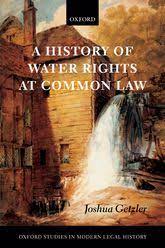
History of water rights at common law
Edisi: Cet. 2
Pengarang:
Getzler, Joshua
Getzler, Joshua
Penerbit:
Oxford University Press,
Oxford University Press,
Tempat Terbit:
New York :
New York :
Tahun Terbit:
2011
2011
Bahasa:
eng
eng
Subjek
Common law
Deskripsi Fisik:
xl, 396 hlm. ; 24 cm
xl, 396 hlm. ; 24 cm
ISBN:
9780199207602
9780199207602
Nomor Panggil:
343.07 GET h
343.07 GET h
Control Number:
INLIS000000000010466
INLIS000000000010466
BIB ID:
0010-0522000003
0010-0522000003
Catatan
This history of the doctrinal evolution of water law investigates the links between law and economic development, with detailed attention to legal concepts and to the history of industrialization. Water resources were central to England’s precocious economic development in the thirteenth and sixteenth centuries, and then again in the industrial, transport, and urban revolutions of the late 18th and early 19th centuries. Each of these periods saw a great deal of legal conflict over water rights, often between domestic, agricultural, and manufacturing interests competing for access to flowing water. From 1750 the common-law courts developed a large but unstable body of legal doctrine, specifying strong property rights in flowing water attached to riparian possession, and also limited rights to surface and underground waters. The new water doctrines were built from older concepts of common goods and the natural rights of ownership, deriving from Roman and Civilian law, together with the English sources of Bracton and Blackstone. Water law is one of the most Romanesque parts of English law, demonstrating the extent to which Common and Civilian law have commingled. Water law stands as a refutation of the still-common belief that English and European law parted ways irreversibly in the 12th century. This book suggests that water law was shaped both by the impact of technological innovations and by economic ideology, but above all by legalism.
Status
Tersedia di OPAC
Bibliografi Nasional Indonesia
Karya Tulis Ilmiah Nasional
Informasi Eksemplar & Metadata
| Nomor Barcode | Nomor Panggil | Akses | Lokasi | Ketersediaan |
|---|---|---|---|---|
00000026327 |
343.07 GET h |
Dapat dipinjam | Mahkamah Konstitusi RI | Tersedia |
Format MARC21 - Total 17 field
| Tag | Ind1 | Ind2 | Nilai | Urutan |
|---|---|---|---|---|
| 001 | _ |
_ |
INLIS000000000010466 | 1 |
| 005 | _ |
_ |
20221102021931 | 2 |
| 035 | # |
# |
$a 0010-0522000003 | 3 |
| 007 | _ |
_ |
ta | 4 |
| 008 | _ |
_ |
221102################g##########0#eng## | 5 |
| 020 | # |
# |
$a 9780199207602 | 6 |
| 082 | # |
# |
$a 343.07 | 7 |
| 084 | # |
# |
$a 343.07 GET h | 8 |
| 100 | _ |
# |
$a Getzler, Joshua | 9 |
| 245 | 1 |
# |
$a History of water rights at common law | 10 |
| 250 | # |
# |
$a Cet. 2 | 11 |
| 260 | # |
# |
$a New York :$b Oxford University Press,$c 2011 | 12 |
| 300 | # |
# |
$a xl, 396 hlm. ; $c 24 cm | 13 |
| 650 | # |
4 |
$a Common law | 14 |
| 520 | # |
# |
$a This history of the doctrinal evolution of water law investigates the links between law and economic development, with detailed attention to legal concepts and to the history of industrialization. Water resources were central to England’s precocious economic development in the thirteenth and sixteenth centuries, and then again in the industrial, transport, and urban revolutions of the late 18th and early 19th centuries. Each of these periods saw a great deal of legal conflict over water rights, often between domestic, agricultural, and manufacturing interests competing for access to flowing water. From 1750 the common-law courts developed a large but unstable body of legal doctrine, specifying strong property rights in flowing water attached to riparian possession, and also limited rights to surface and underground waters. The new water doctrines were built from older concepts of common goods and the natural rights of ownership, deriving from Roman and Civilian law, together with the English sources of Bracton and Blackstone. Water law is one of the most Romanesque parts of English law, demonstrating the extent to which Common and Civilian law have commingled. Water law stands as a refutation of the still-common belief that English and European law parted ways irreversibly in the 12th century. This book suggests that water law was shaped both by the impact of technological innovations and by economic ideology, but above all by legalism. | 15 |
| 990 | # |
# |
$a 26327/MKRI-P/XII-2017 | 16 |
| 990 | # |
# |
$a 26327/MKRI-P/XII-2017 | 17 |
Penjelasan Field MARC21:
- 001: Control Number
- 005: Date and Time of Latest Transaction
- 020: ISBN
- 100: Main Entry - Personal Name
- 245: Title Statement
- 250: Edition Statement
- 260: Publication Information
- 300: Physical Description
- 650: Subject
- 700: Added Entry - Personal Name
Aksi Cepat
Informasi Katalog
Ditambahkan: 13 May 2022