Detail Katalog
ID: 10671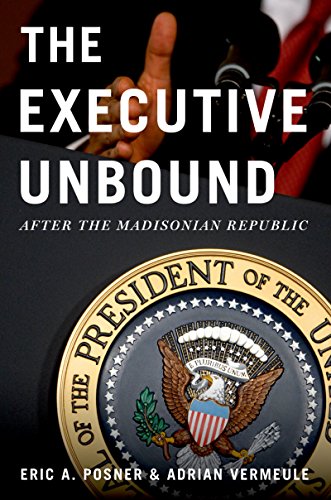
Executive Unbound : After the Madisonian Republic / Eric A. Posner, Adrian Vermeule
Pengarang:
Posner, Eric A. ; Vermeule, Adrian
Posner, Eric A. ; Vermeule, Adrian
Penerbit:
Oxford University Press,
Oxford University Press,
Tempat Terbit:
New York :
New York :
Tahun Terbit:
2010
2010
Bahasa:
ind
ind
Subjek
Executive power--United States.
Deskripsi Fisik:
249 p. ; 25 cm
249 p. ; 25 cm
ISBN:
9780199765331
9780199765331
Nomor Panggil:
342.73 POS e
342.73 POS e
Control Number:
INLIS000000000010593
INLIS000000000010593
BIB ID:
0010-0622000064
0010-0622000064
Catatan
Ever since Arthur M. Schlesinger Jr. used “imperial presidency” as a book title, the term has become central to the debate about the balance of power in the U.S. government. Since the presidency of George W. Bush, when advocates of executive power gained ascendancy, the argument has blazed hotter than ever. Many argue that the Constitution itself is in grave danger. What is to be done? The answer, according to this book, is nothing. The book challenges conventional wisdom, arguing that a strong presidency is inevitable in the modern world. It is noted that most scholars object to today's level of executive power because it varies so dramatically from the vision of the framers of the Constitution. But the book finds fault with James Madison's premises. Like an ideal market, Madison's separation of powers has no central director, but it lacks the price system which gives an economy its structure; there is nothing in checks and balances that intrinsically generates order or promotes positive arrangements. In fact, the greater complexity of the modern world produces a concentration of power, particularly in the White House. The book charts the rise of executive authority, noting that among strong presidents only Richard Nixon has come in for severe criticism, leading to legislation which was designed to limit the presidency, yet which failed to do so. Political, cultural and social restraints, it is argued, have been more effective in preventing dictatorship than any law. The executive-centered state tends to generate political checks that substitute for the legal checks of the Madisonian constitution.
Status
Tersedia di OPAC
Bibliografi Nasional Indonesia
Karya Tulis Ilmiah Nasional
Informasi Eksemplar & Metadata
| Nomor Barcode | Nomor Panggil | Akses | Lokasi | Ketersediaan |
|---|---|---|---|---|
00000026982 |
342.73 POS e |
Dapat dipinjam | Mahkamah Konstitusi RI | Tersedia |
Format MARC21 - Total 16 field
| Tag | Ind1 | Ind2 | Nilai | Urutan |
|---|---|---|---|---|
| 001 | _ |
_ |
INLIS000000000010593 | 1 |
| 005 | _ |
_ |
20220609102542 | 2 |
| 035 | # |
# |
$a 0010-0622000064 | 3 |
| 007 | _ |
_ |
ta | 4 |
| 008 | _ |
_ |
220609################g##########0#ind## | 5 |
| 020 | # |
# |
$a 9780199765331 | 6 |
| 082 | # |
# |
$a 342.73 | 7 |
| 084 | # |
# |
$a 342.73 POS e | 8 |
| 100 | _ |
# |
$a Posner, Eric A. | 9 |
| 245 | 1 |
4 |
$a Executive Unbound : $b After the Madisonian Republic /$c Eric A. Posner, Adrian Vermeule | 10 |
| 260 | # |
# |
$a New York :$b Oxford University Press,$c 2010 | 11 |
| 300 | # |
# |
$a 249 p. ; $c 25 cm | 12 |
| 700 | _ |
# |
$a Vermeule, Adrian | 13 |
| 520 | # |
# |
$a Ever since Arthur M. Schlesinger Jr. used “imperial presidency” as a book title, the term has become central to the debate about the balance of power in the U.S. government. Since the presidency of George W. Bush, when advocates of executive power gained ascendancy, the argument has blazed hotter than ever. Many argue that the Constitution itself is in grave danger. What is to be done? The answer, according to this book, is nothing. The book challenges conventional wisdom, arguing that a strong presidency is inevitable in the modern world. It is noted that most scholars object to today's level of executive power because it varies so dramatically from the vision of the framers of the Constitution. But the book finds fault with James Madison's premises. Like an ideal market, Madison's separation of powers has no central director, but it lacks the price system which gives an economy its structure; there is nothing in checks and balances that intrinsically generates order or promotes positive arrangements. In fact, the greater complexity of the modern world produces a concentration of power, particularly in the White House. The book charts the rise of executive authority, noting that among strong presidents only Richard Nixon has come in for severe criticism, leading to legislation which was designed to limit the presidency, yet which failed to do so. Political, cultural and social restraints, it is argued, have been more effective in preventing dictatorship than any law. The executive-centered state tends to generate political checks that substitute for the legal checks of the Madisonian constitution. | 14 |
| 600 | # |
4 |
$a Executive power--United States. | 15 |
| 990 | # |
# |
$a 26982/MKRI-P/VI-2022 | 16 |
Penjelasan Field MARC21:
- 001: Control Number
- 005: Date and Time of Latest Transaction
- 020: ISBN
- 100: Main Entry - Personal Name
- 245: Title Statement
- 250: Edition Statement
- 260: Publication Information
- 300: Physical Description
- 650: Subject
- 700: Added Entry - Personal Name
Aksi Cepat
Informasi Katalog
Ditambahkan: 09 Jun 2022